For Schools and Community Groups
Welcome to the programme! This page holds the key information you need as a school or community group nominating participants for Naturally Connected Young People (NCYP).
On this page
About the programme
How nature supports good mental health
Participation in the programme
Delivery expectations for schools and groups
Evaluation of the programme
The Naturally Connected Young People programme works right across the UK and Crown Dependencies, supporting as many young people aged 11-16 as possible to take part in immersive nature connection activities to support their health and well-being for life.
Delivered by local Wildlife Trusts, the programme supports young people who are traditionally underserved and underrepresented in their communities, who may not feel able, or welcome to spend time in nature. The programme is trialling a range of approaches and activities across both secondary schools and community settings, exploring different ways of building lasting, resilient connections with nature.
The programme will run for three years from summer 2025 to summer 2028 as more Wildlife Trusts across the federation join each year.
Nature and mental health?
Having a strong connection with nature supports good mental health and lowers depression and anxiety. We know that underserved young people often have the least access to nature, coupled with the highest levels of poor health and well-being outcomes. This programme seeks to address this. By bringing young people experiencing the greatest levels of hardship closer to the natural world, we can provide both respite and the confidence to build a life-long relationship with nature that they can lean on time and again.
Spending regular time in nature can be transformational for young people who struggle to cope with school or community life. Being outside naturally lowers our stress response, making it easier for young people to listen, focus and connect with learning content. Teachers and leaders who have embedded learning outdoors have reported that young people develop in confidence, work well in groups and take on leadership roles and responsibilities when outside.
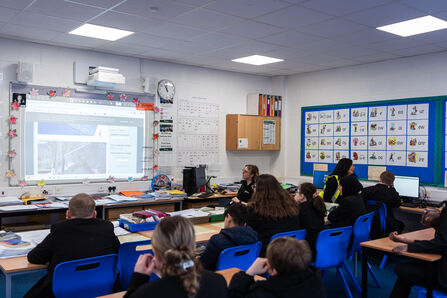
Young people learning about nature with Derbyshire Wildlife Trust © Ben Connell
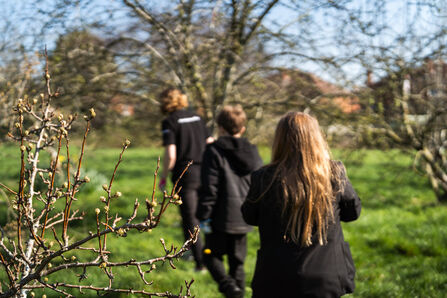
Young people creating bird boxes with Derbyshire Wildlife Trust © Ben Connell
Participation in the programme
The NCYP programme is for young people aged between 11 and 16 years old, who are new to nature and traditionally underserved and underrepresented in their communities.
This means that they might have experienced barriers to accessing nature in their lives and won’t have had many opportunities to connect with nature previously.
Free School Meal status provides a useful indicator for identifying young people who could benefit most from this programme, but please also consider groups who experience significant hardship, for example:
- forced migrants including Asylum Seekers and Refugees
- minoritised ethnic groups
- people who are not in permanent housing or unhoused i.e., rough sleeping, couch-surfing etc.
- LGBTQ+ communities
- rural communities
- people with long-term health needs (either physical or mental)
- people facing poverty
Supporting Naturally Connected Young People to reach the young people who need it most
As teachers and community leaders, we value your insight into identifying the young people who need this kind of support most. When engaging with your local Wildlife Trust we’ll ask you to nominate young people from within your school or community group who meet the aims and criteria of the programme. These young people should fall within the guidance above.
It is also important that the young people invited to be part of NCYP do not feel singled out and that participation is described as an opportunity to be part of an exciting new programme.
Delivery expectations
Led by your local Wildlife Trust, young people you have selected will participate in repeat, progressive sessions that incrementally increase their confidence and enjoyment of the natural world.
These sessions will typically take place within school grounds (if the project is based within a school) or in local natural spaces (if based in a community setting).
Each project offers a minimum of six sessions over one academic year. The schedule or pattern of delivery will be co-designed with you to fit into existing timetabled activities.
Evaluation
An independent evaluator (Moor Impact) has been appointed to help us understand how the programme works, and what activities lead to the best outcomes for the young people who participate.
Collection of data on this programme is based on consent from participants and parents/guardians. We cannot collect project data without confirmation that the relevant consent has been obtained.
The data collected through NCYP will not only be used for internal review, but may be used to help shape critical policy asks of public health, advocating for greater nature inclusion and equity for young people and communities, for the betterment of their health and wellbeing.
Here is a [Link] to the standard MoU template for schools and community groups, which includes suggested roles, responsibility and expectations for both your schools or community group and your local Wildlife Trust.